The Lessons that Made Me a Better Science Communicator (and How You Can Apply Them Too)
 Dr. Rosalie Sinclair
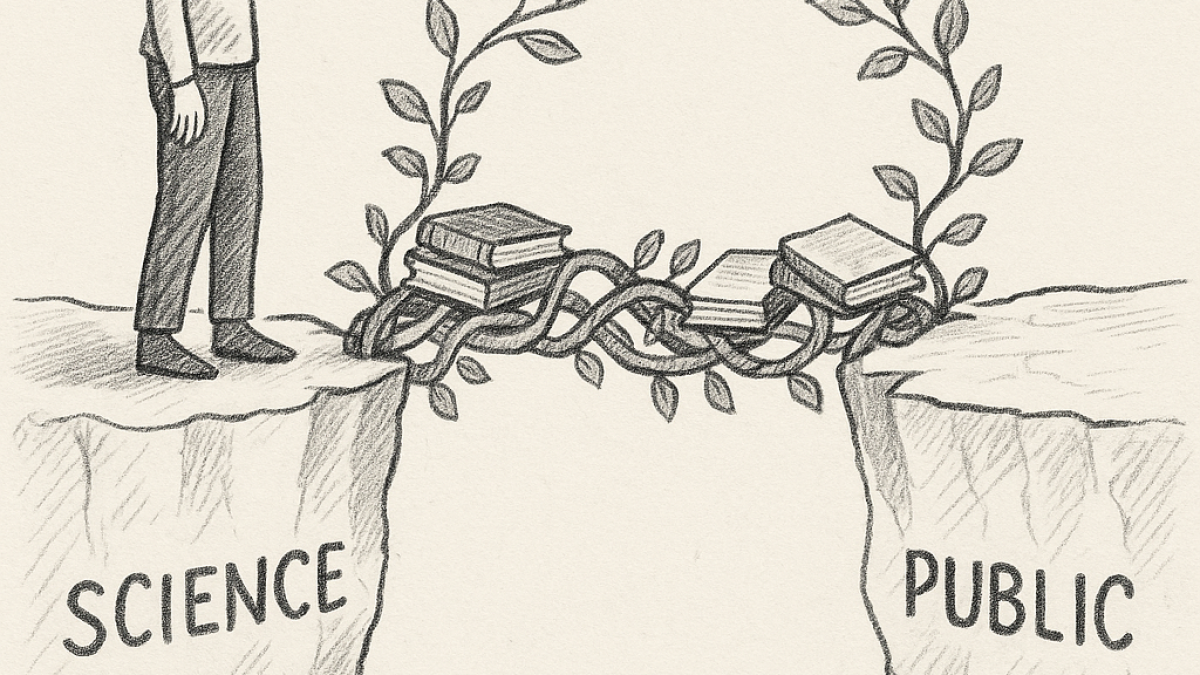
Discover key lessons from my science communication journey & learn how to build trust, spark curiosity, and connect with your audience.
When I first started sharing science with the public, I assumed the hardest part would be memorizing the facts, citing the right studies, and getting the content technically correct. I quickly learned that wasn’t the real challenge.
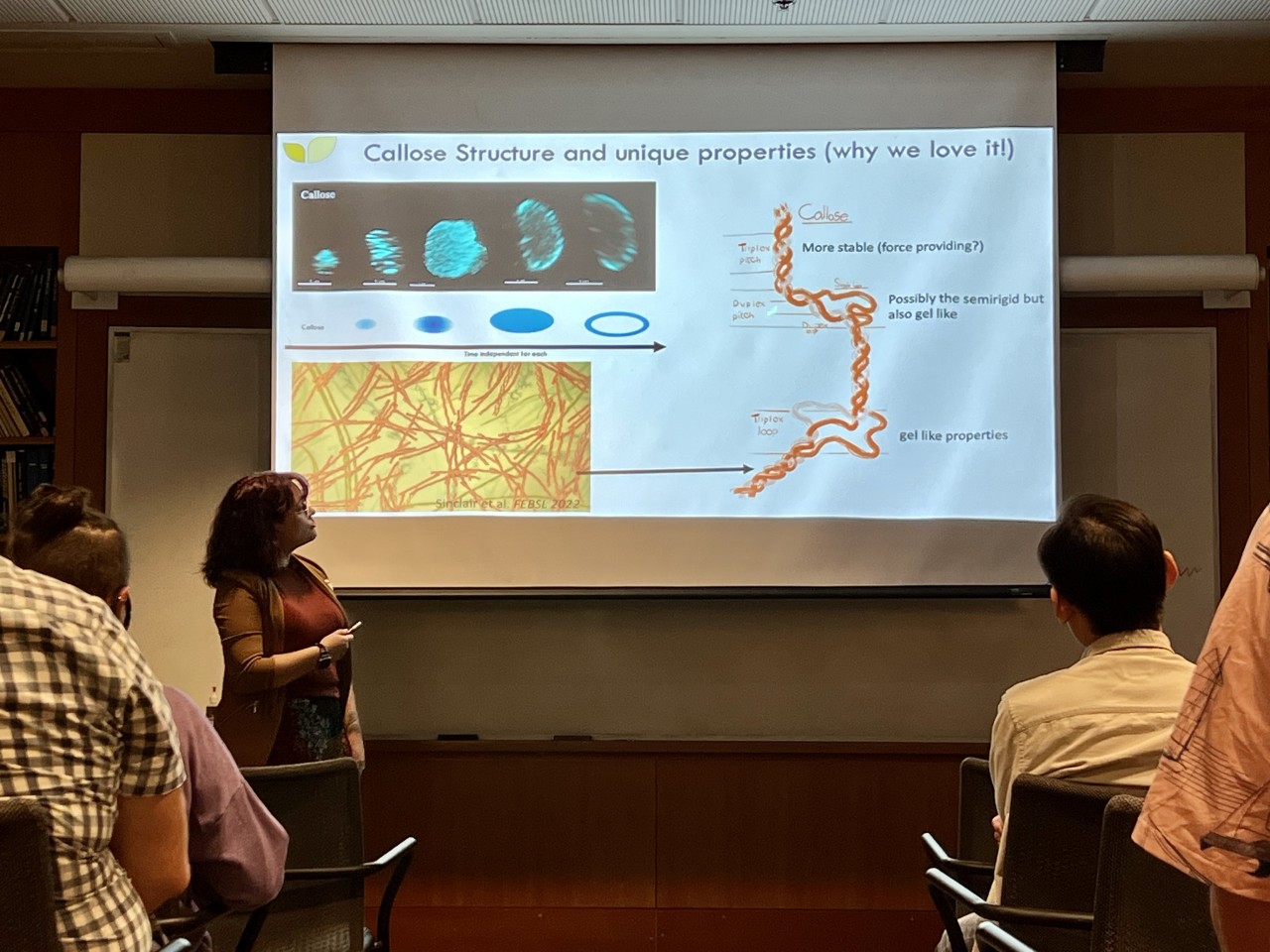
The hard part was figuring out how to talk about science in a way that made people want to listen, care, and even feel something. Over the years, I have stumbled over jargon, wrestled with misinformation, faced skepticism, and tried to make my voice heard in the digital crowd. Every stumble taught me something valuable. Every conversation and creative risk brought me closer to what really works.
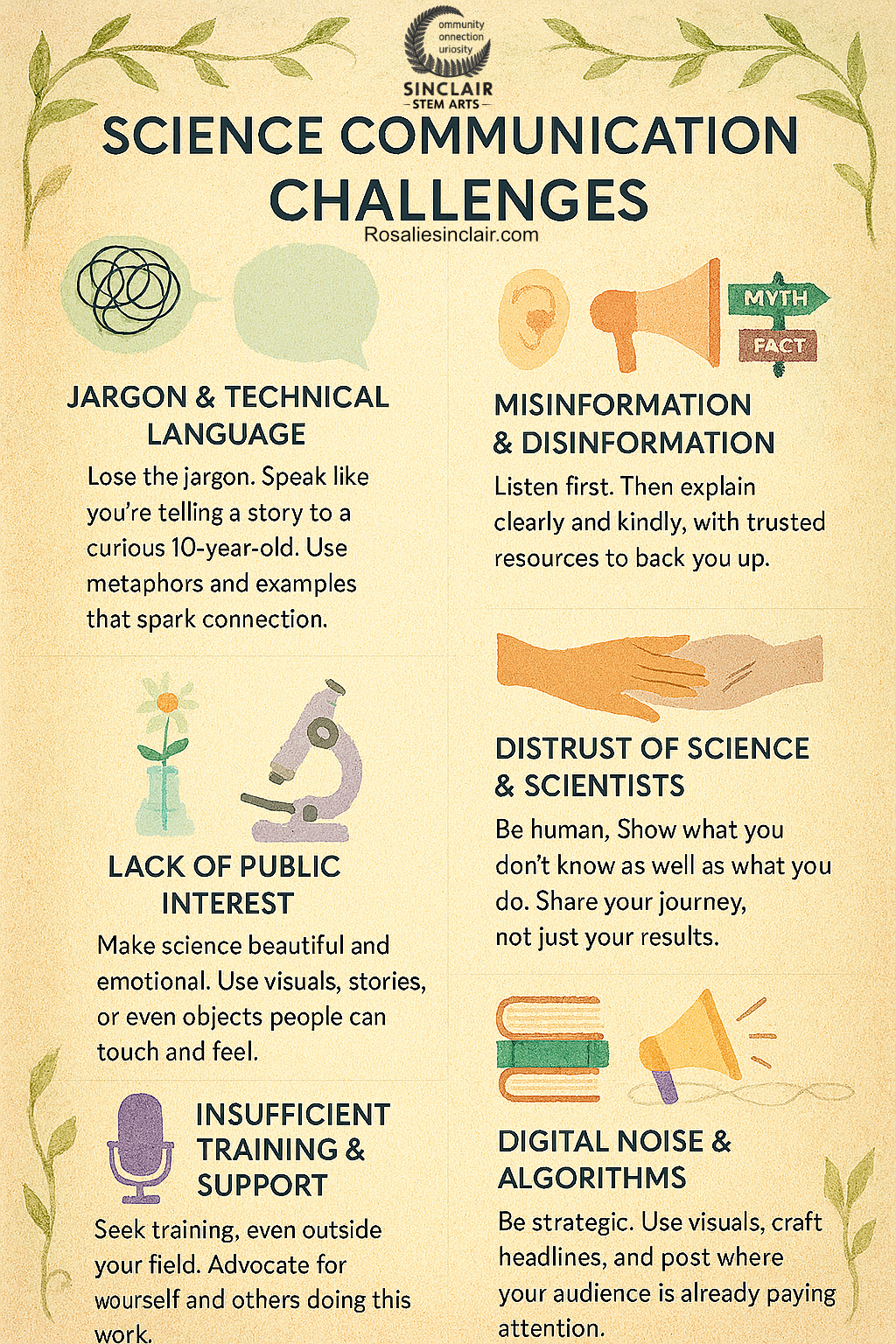
Here are six of the biggest challenges I’ve encountered in science communication and the lessons I’ve learned about how to meet them.
1️⃣ Jargon and Technical Language
In my early graduate school talks, I thought I was explaining my work clearly. Then a friend came up afterward and said:
"You lost me at ‘membrane curvature dynamics’ and never got me back."
That moment taught me that even when you think you’re being clear, your audience might still feel left behind if you’re speaking in technical terms.
Over time, I practiced explaining my research on plant cell walls, nanobionics, and membranes in everyday terms. Instead of “cytoskeleton,” I said “the cell’s scaffolding.” Instead of giving a definition, I painted a picture or told a story about what the cell was doing.
Advice:
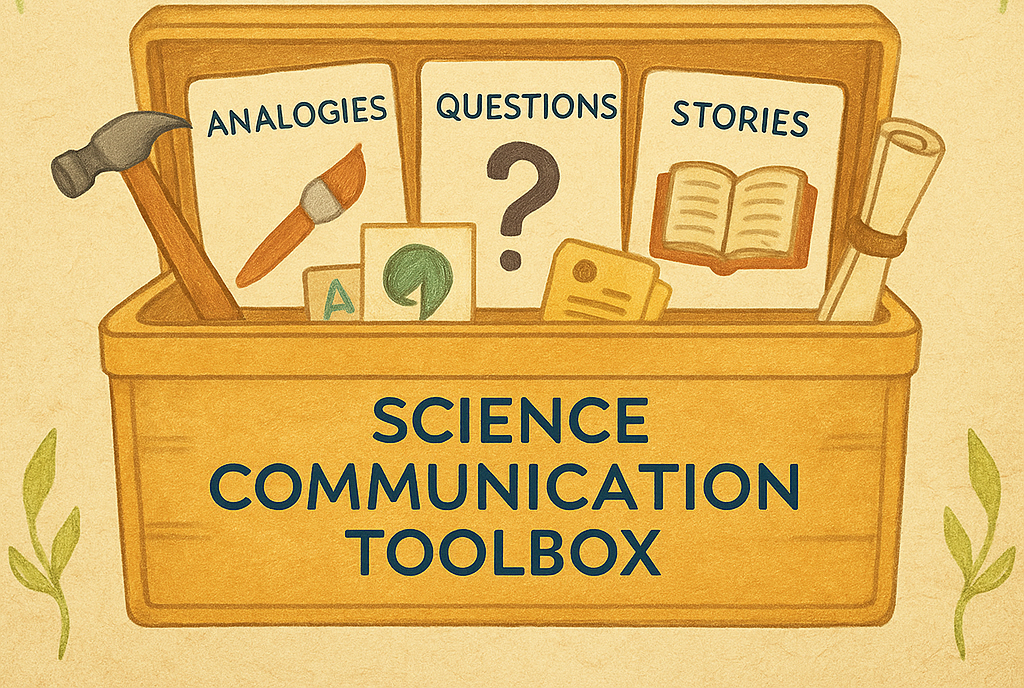
Try explaining your work to a curious 10-year-old or even someone outside of your field entirely. Notice where they light up and where their eyes glaze over. Use metaphors, analogies, and concrete examples they can relate to. When you do use a technical term, introduce it gently and define it clearly.
2️⃣ Misinformation and Disinformation
At my first farmers’ market outreach event, someone came to my booth angry and told me that scientists were hiding “the truth” about GMOs.
My instinct was to defend myself, but instead, I just listened. Listening diffused their anger enough that we could have a conversation, not an argument.
Since then, I’ve spoken at podcasts, community events, classrooms, and even on TV, trying to calmly explain why certain myths exist and why the evidence points elsewhere. I’ve learned that people don’t respond well to being told they’re wrong. They respond to empathy and clear explanations.
Advice:
Start by listening. Acknowledge what the person is feeling, even if you disagree with what they believe. Frame your response as adding context or clarifying, rather than correcting. Share trusted, accessible resources they can explore on their own. You are more likely to open someone’s mind if they feel respected and heard.
3️⃣ Lack of Public Interest and Engagement
For a long time, it felt like I was shouting into a void. People walked past my posters at events without even glancing.
Then one day, I brought along a glass sculpture inspired by plant cell division. People stopped. They pointed. They asked questions.
That experience taught me the power of connecting science to beauty, art, and emotion. When I integrated creative elements, jewelry workshops, animations, garden tours, people became curious and engaged.
Advice:
Think about how your topic touches real lives. What does it look like? What does it feel like? Create a sensory or emotional hook that people can connect to. You might use a story, an image, a metaphor, or even an object to bring the concept to life. People are more likely to remember what they can feel and see than what they simply hear.
4️⃣ Distrust of Science and Scientists
Once, at a community event, a woman told me:
"You all just think you’re smarter than us."
That was a wake-up call.
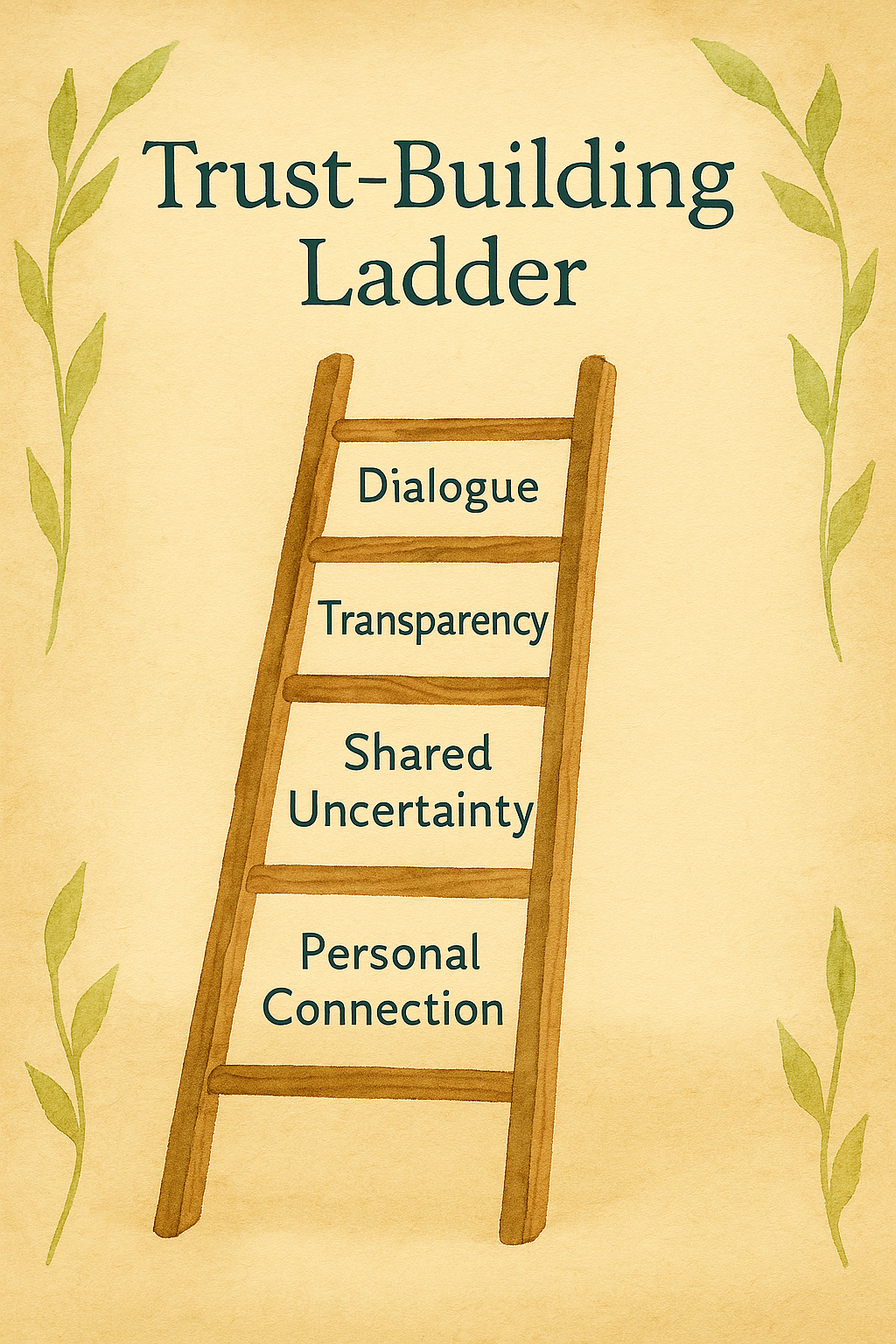
Since then, I’ve focused on inviting questions and sharing my own uncertainties. I’ve been intentional about showing the human side of science, mentoring students, working in inclusive classrooms, and being transparent about the limits of our knowledge. Show that science is a collaborative, evolving process, not a rigid set of answers.
Advice:
Don’t treat communication as a lecture. Treat it as a dialogue. Share not just what you know but also how you came to know it. Admit what is still unknown. Show that science is a collaborative, evolving process, not a rigid set of answers. People trust people, not institutions, so let them see the person behind the data.
5️⃣ Insufficient Training and Support
For years, I felt like I was winging it. There was no training, no guidance, and little recognition for outreach work.
That changed when I sought out workshops, earned a Designated Emphasis in Science Communication, and even trained with Pixar animators on how to illustrate science stories and utilize shapes and colors effectively. I also started speaking up for better support and recognition for communicators in my department.
Advice:
Seek out resources, even if you must look beyond your institution. Take workshops, practice writing and speaking for the public, and connect with others who are doing the same. Advocate for yourself and others, remind your colleagues and supervisors that public engagement is part of the scientific mission and deserves support.
6️⃣ Digital Noise and Algorithmic Barriers
I’ve put my heart into posts that disappeared into the abyss, while sensational (and inaccurate) headlines got all the attention.
That’s when I learned to play smarter. As Social Media Chair for Science Says, I crafted visuals, wrote inviting headlines, and partnered with others to amplify our message. By making my content more engaging and accessible, I found ways to rise above the noise without compromising accuracy.
Advice:
Be strategic. Use visuals, videos, and storytelling to catch attention while maintaining integrity. Posts where your audience already spends time and learns what formats they respond to. Collaborate with trusted community members or influencers who can help carry your message farther. Don’t just hope your work will be seen, plan for it.
Why it matters:
Science communication influences public health, shapes policy, and helps people make informed choices. It’s a vital skill not just for scientists but for anyone who wants to contribute to a more informed, thoughtful world.
One of the most powerful things I’ve learned is that effective science communication doesn’t just feel good, it changes things.
When I explained my work in accessible ways, more people engaged with me at events, asked thoughtful questions, and even invited me to speak elsewhere. In classrooms, students started raising their hands more, sharing their own ideas, and sometimes even telling me later that it inspired them to pursue science.
In some cases, clear communication even informed community decisions, like when a local garden group shifted to more pollinator-friendly practices after a workshop.
Acknowledging the Emotional Side
I want to say this clearly: it’s okay to feel frustrated, discouraged, or even scared when you step into the public arena. I’ve felt all those things too.
I’ve also felt moments of joy that made it all worth it, a child’s wide-eyed “Wow!” when they saw plant cells under a microscope, a community member coming back to tell me they started composting because of our conversation, a student who emailed years later to say they still think of me when they see a sunflower.
These moments matter
What I’ve Learned
The biggest lesson I’ve learned?
Science communication isn’t just about explaining facts. It’s about building trust, sparking curiosity, and creating connections that feel meaningful and human.
When I allowed myself to be creative, listening more than I talked, sharing both the certainty and the wonder of what we do know, I discovered something powerful: people didn’t just understand better, they cared more deeply too.
If you’re ready to share your passion in a way that inspires and connects, I’d love to help.
I’ve created a free Science Storytelling Guide, packed with practical tips to help you navigate challenges and communicate with confidence.
Ongoing Support
If you’ve faced your own hurdles in science communication, you don’t have to navigate them alone. Let’s grow your skills—and your impact—together.
🌱 Join my mailing list for stories, tips, and resources delivered to your inbox each month.
🌱 Practice with us: Starting in August, I’ll post monthly challenges like “Explain a scientific concept in 100 words” to help you sharpen your skills and get feedback.
🌱 Or simply reach out and share your story, I’d love to hear it.
Ready to Take the Next Step?
If you’re looking for personal guidance and support on your own science communication journey, I’d be honored to help.
👉 Book a free consultation call with me today, and let’s explore how we can work together to make your message resonate.book a free consultation call with me!
Recommended Tools and Guides:
- Create your own Plain Language Glossaries: Help demystify jargon for non-experts.
- Science Communication Workshops: Look for local or online training (e.g., Alan Alda Center for Communicating Science, COMPASS).
- Trusted Fact-Checking Sites: Direct readers to Snopes, FactCheck.org, or Sense About Science for reliable information.
Plain Language Glossaries & Jargon Tools
- Create Your Own Glossary:
- List specialized terms from your field and write simple, everyday definitions for each.
- Test definitions with non-experts and revise for clarity.
- Use analogies and examples to make concepts relatable.
- Online Glossary Resources:
- AGU SciComm Toolkits: Includes guides for crafting plain language summaries and communicating complex ideas clearlyGO.
- COMPASS Message Box: Helps distill research into key messages for non-expert audiencesGO.
- AAAS Center for Public Engagement: Offers tips for simplifying technical language and engaging the publicGO.
Trusted Fact-Checking Sites
Site Name |
Focus Area |
Description / Link |
|---|---|---|
Snopes |
General, science, urban legends |
|
FactCheck.org |
Politics, science, health |
|
PolitiFact |
Political statements, public claims |
|
Science Feedback |
Science, climate, health |
|
Sense About Science |
Science, public understanding |
UK-based, promotes evidence-based science and public engagement. |
BBC Verify |
Global news, science, major events |
|
AFP Fact Check |
International news, science |
|
AP Fact Check |
US and global news, science |
|
Verify This |
General, science, current events |
|
Media Bias Fact Check |
Media, science, journalism |
Additional Tools & Guides
- Shorthand’s Science Communication Tools:
- Overview of digital tools for engaging audiences, including social media strategies and multimedia content GO.
- AGU Virtual Learning Hub:
- Webinars, infographics, and animations for science communicators GO.
- FirstDraftNews Fact-Checking Course:
- Free online course for learning verification techniques GO.
- Harvard Library Fact-Checking Guide:
- Aggregates global fact-checking resources and bias charts GO.
Refrences
National Academies of Sciences, Engineering, and Medicine. (2017). The complexities of communicating science. In Communicating science effectively: A research agenda (pp. 23–45). National Academies Press. https://www.ncbi.nlm.nih.gov/books/NBK425719/
Litmaps. (2023, May 18). Challenges in science communication and 5 tips to overcome them. https://blog.litmaps.com/p/challenges-in-science-communication
Bucchi, M. (2019). Facing the challenges of science communication 2.0: Quality, credibility and expertise. EMBO Reports, 20(7), e48086. https://pmc.ncbi.nlm.nih.gov/articles/PMC7015522/
CONCISE. (2020). Challenges and practices in communicating science and health. https://www.scribd.com/document/607247414/Challenges-and-Practices-in-Communicating-Science-and-Health
Jensen, E., & Gerber, A. (2020). Evidence-based science communication. Frontiers in Communication, 4, 78. https://www.frontiersin.org/journals/communication/articles/10.3389/fcomm.2019.00078/full
Swire-Thompson, B., & Lazer, D. (2022). Reducing health misinformation in science: A call to arms. The Annals of the American Academy of Political and Social Science, 700(1), 159–171. https://journals.sagepub.com/doi/10.1177/00027162221087686
National Academies of Sciences, Engineering, and Medicine. (2017). Communicating science effectively: A research agenda. National Academies Press. https://www.purdue.edu/research/oevprp/funding-and-grant-writing/docs/Communicating%20Science%20Effectively.pdf
West, J. D., & Bergstrom, C. T. (2021). Misinformation in and about science. Proceedings of the National Academy of Sciences, 118(15), e1912444117. https://www.pnas.org/doi/pdf/10.1073/pnas.1912444117
National Academies of Sciences, Engineering, and Medicine. (2017). Building the knowledge base for effective science communication. In Communicating science effectively: A research agenda (pp. 47–68). National Academies Press. https://www.ncbi.nlm.nih.gov/books/NBK425713/
West, J. D., & Bergstrom, C. T. (2021). Misinformation in and about science. PubMed. https://pubmed.ncbi.nlm.nih.gov/33837146/
Pielke Jr., R. (2022, June 23). Five challenges facing science communication. The Honest Broker. https://rogerpielkejr.substack.com/p/five-challenges-facing-science-communication
Entradas, M., & Bauer, M. W. (2023). Science communication and public trust in science. Geographical Journal, 189(1), 3–8. https://www.tandfonline.com/doi/full/10.1080/03080188.2022.2152244
American Association of Medical Colleges. (2022, July 14). Widespread distrust in science: Is the way we communicate to blame? https://www.aamc.org/news/widespread-distrust-science-way-we-communicate-blame
Categories: : All, SciCom Tips