Roots and Algorithms: Learning to Grow in a Season of Change
 Dr. Rosalie Sinclair
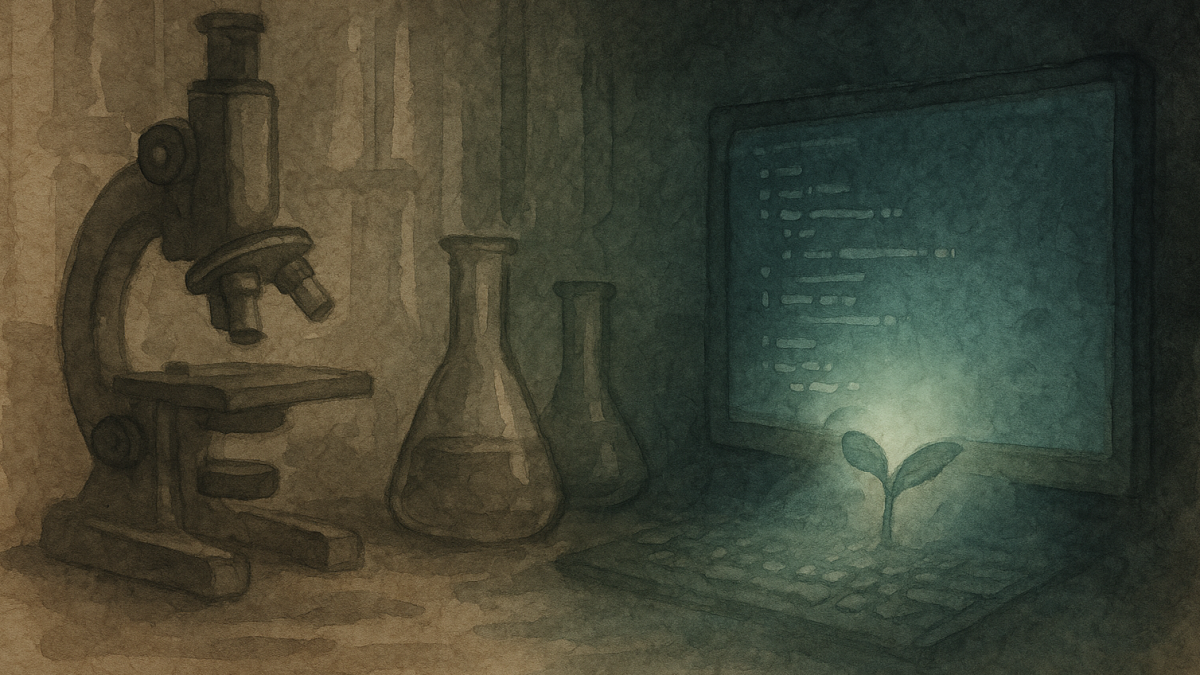
In fall’s quiet shift, roots and neural networks remind us how science, like nature, adapts, growing through change, curiosity, and hidden resilience.
Roots and Algorithms: Learning to Grow in a Season of Change
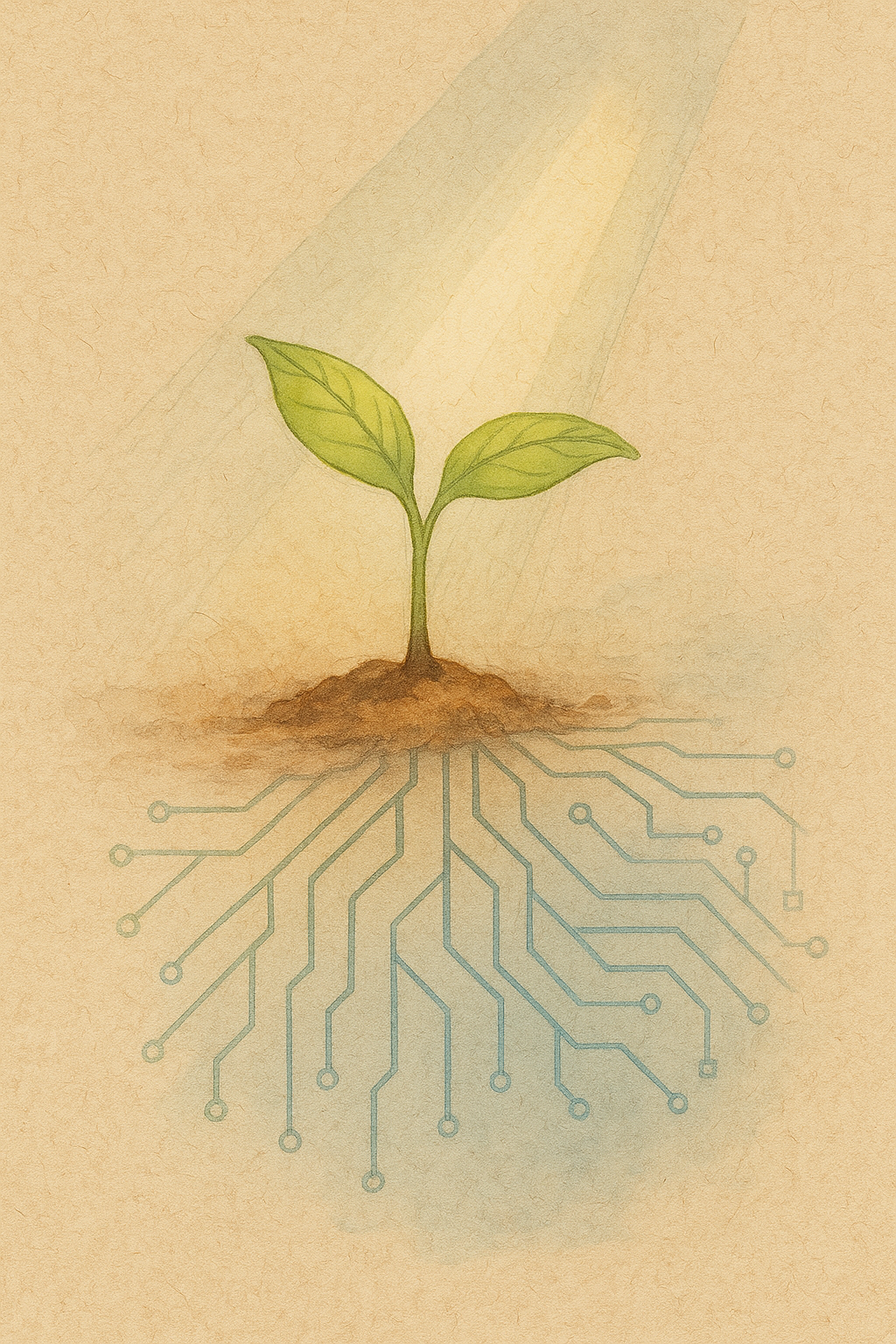
October has always felt like both an ending and a beginning. The garden slows, leaves turn brittle at the edges, and what is alive above ground starts to fade. This year, I found myself mirroring that cycle, pulling energy inward, recalibrating, and beginning again in a new ecosystem.
After years rooted in academic research, I have stepped into a new role as a biology expert for an AI training company. Like many scientists, my path shifted with the tides of funding and opportunity, but also with curiosity. I wanted to see what would happen if I took what I know about living systems and placed it somewhere unexpected: within the growing world of artificial intelligence.
This transition has reminded me that science is not just about discovery; it is about adaptation. Every field, like every ecosystem, must find balance when conditions change.
The Science of Slowing Down
In October, plants are busy doing what looks, from the outside, like nothing at all. Yet underground and within their cells, an extraordinary transformation begins. Trees pull nutrients and sugars down from their leaves into their roots, tucking them away for spring. The green fades as chlorophyll breaks down, revealing golds and reds that were always there, quietly waiting beneath the surface.
Cell walls along the leaf stem begin to loosen, preparing the leaf to fall cleanly away. Even the cells themselves begin to change, reinforcing their walls with waxy layers that keep water from escaping as cold settles in.
This slowing is not failure or decay. It is strategy. Plants rewire their metabolism to conserve energy and strengthen tissues against frost. Roots continue to grow slowly in the warmth of the soil. Fungal networks carry on their quiet exchanges, moving nutrients from where they are abundant to where they are needed most. Even microbes shift gears, forming spores or protective coatings that will endure through the freeze.
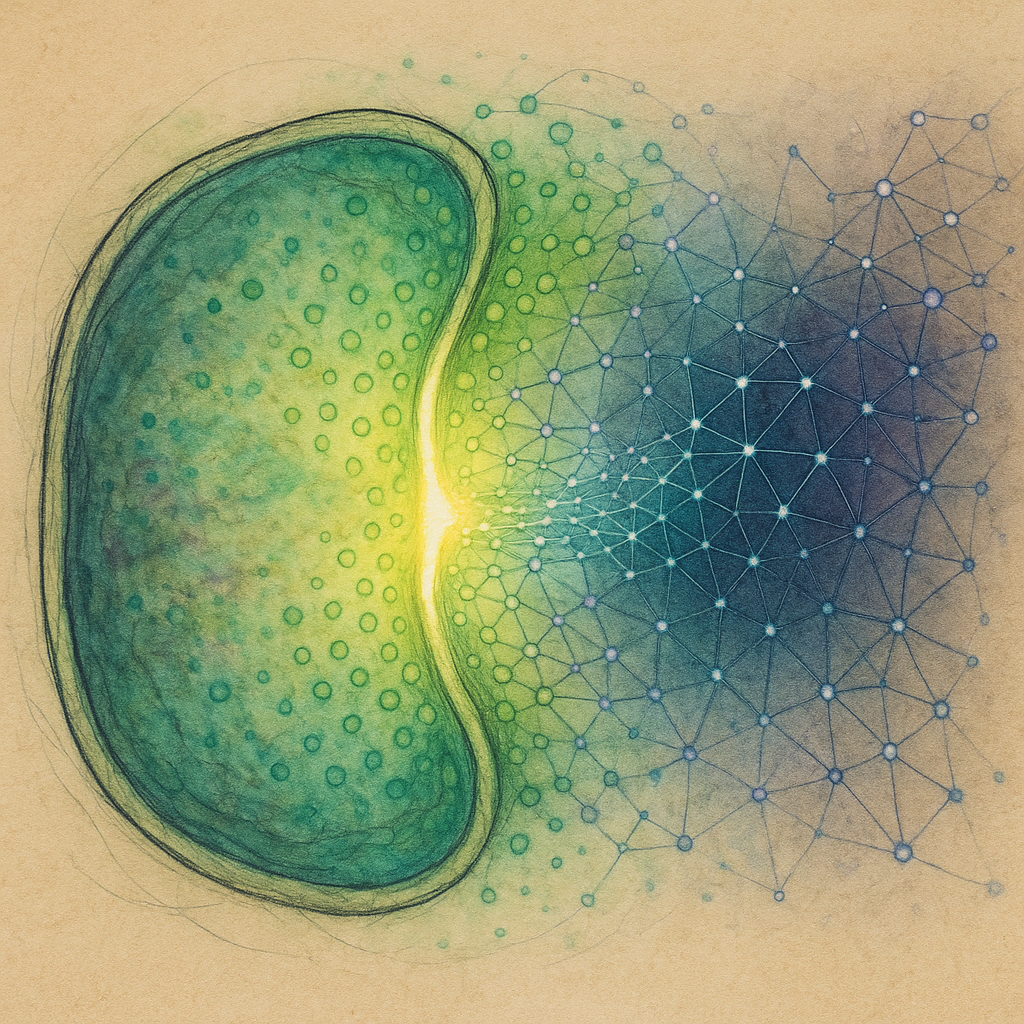
Every system, from the tallest oak to the smallest root hair, is preparing for survival and for what comes next.
Perhaps that is why I have always loved fall. It is not the end of growth, only the start of a quieter kind.
Roots, Algorithms, and the Bridge Between Worlds
Working with AI has reminded me of something deeply biological. Roots do not simply grow downward. They sense, adapt, branch, and learn from feedback. Neural networks behave in much the same way. Both systems thrive on iteration and connection, discovering patterns through exploration and response.
Long before I formally entered this world, I had already brushed against it in the lab. During my PhD, I helped train some of the earliest plant models in Aivia AI microscopy, teaching the software to recognize and track the intricate structures inside dividing plant cells. We used time-lapse data from lattice light sheet microscopy, a technology that captures living cells in astonishing detail across space and time.
Our goal, described in Sinclair et al., 2024, was to map how thousands of tiny membrane-bound vesicles move together to build a new cell wall, a process called cytokinesis. Each vesicle carries materials to the growing cell plate, and we wanted to understand how this hidden choreography unfolds in real time. AI tools like Aivia offered a way to manage the flood of images and detect subtle motion patterns that are nearly impossible to follow by hand.
In the end, my team chose a semi-manual model for precision, but the experience left a lasting impression. It showed me how algorithms can extend human observation rather than replace it, helping us see familiar systems in new ways.
So when funding shifts and uncertainty opened the door to new horizons, that same curiosity resurfaced. If roots and networks both grow through pattern recognition, perhaps there is room to learn from both. This new work feels like tending another kind of ecosystem, one built not from soil and cells, but from data, context, and collaboration.
Ghosts in the Lab, Light in the Code
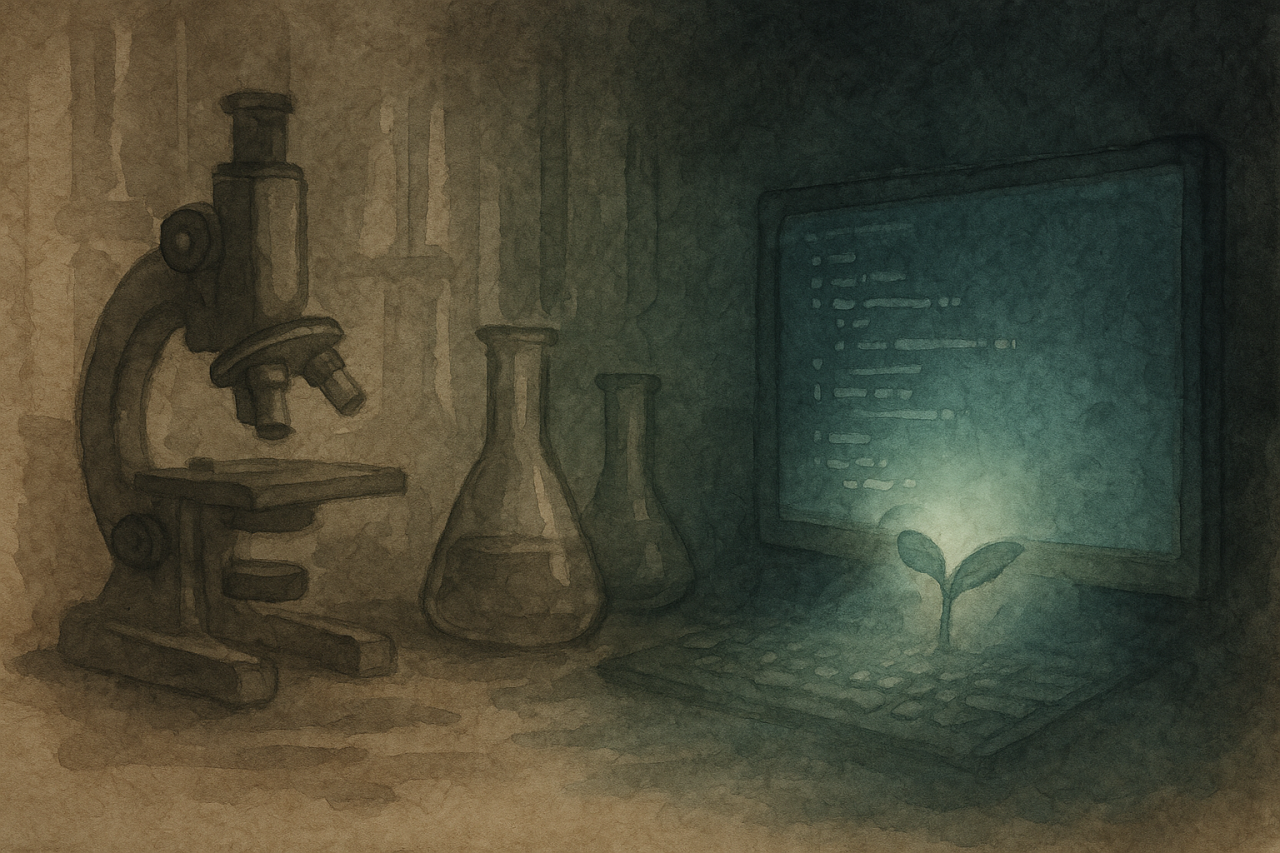
I think often of the “ghosts in the lab” , the half-finished experiments, unrealized grants, and ideas that still whisper at the edges of memory. They remind me that science does not vanish when resources fade. It lives on in every mind that still wonders what if.
This season, as the world turns toward winter, I find comfort in that idea. Growth is not always visible. Sometimes it happens underground, in code, or in quiet spaces between careers. Whether through roots or algorithms, the same truth holds: keep learning, keep adapting, and keep reaching toward the light.
Categories: : All